

San Diego Dental Health Center UCSD
Well Defined Unilocular Radiolucencies
Training details
US$299
Details and registration continue in the Dentoflow application.
About this training
Content
Description
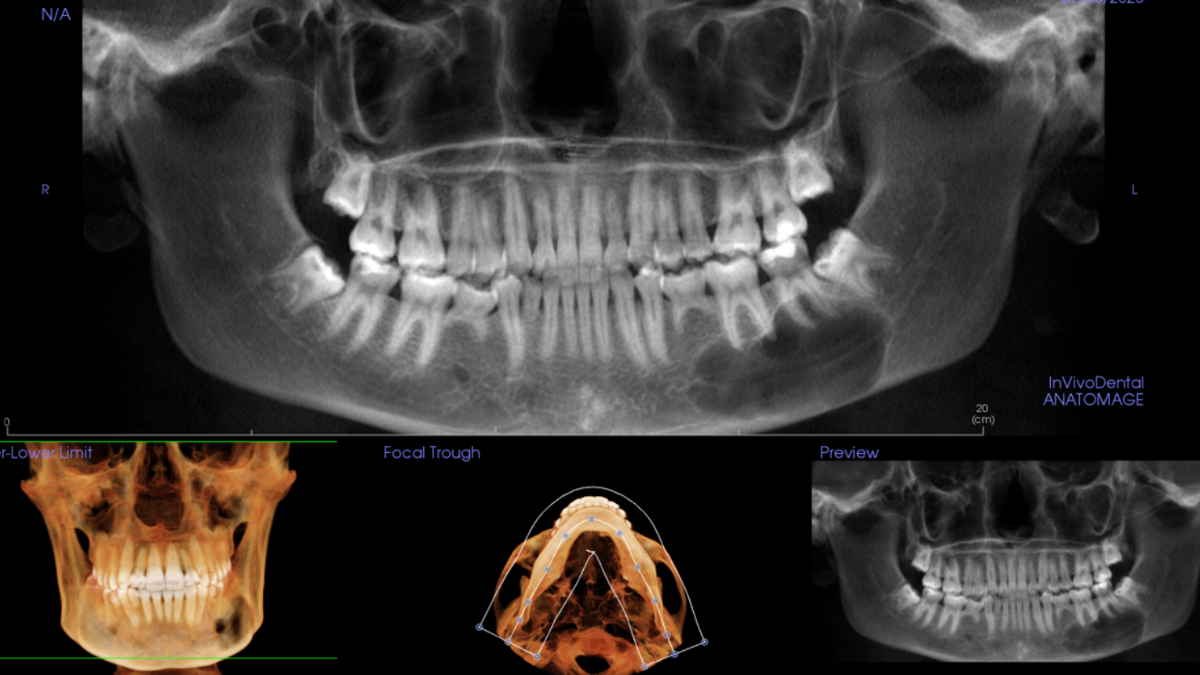
This course helps you learn about the familiarity with the radiological features on 2D radiographs and on CBCT and the differential diagnoses of well defined unilocular diseases encounter in the jaws. Lesions that commonly present as well-defined radiolucencies are cysts and neoplasms. Cysts are common and the majority are inflammatory. Almost all true cysts and most benign neoplasms expand by hydrostatic pressure and are therefore frequently spherical or nearly spherical in shape. This shape is achieved in larger cysts and neoplasms by displacing the buccal and lingual cortices and presenting as buccolingual expansion. Odontogenic or non odontogenic lesions, arising within the jaws, if sufficiently large will displace the mandibular canal, create resorption of the adjacent teeth and expand the cortices. These lesions may enlarge considerably if allowed to develop unchecked, and have the potential for pathological transformation. In this lecture we will address the radiological appearance of the most common well defined unilocular radiolucencies of the jaws and highlight the importance of early detection and management of such lesions.
What you'll learn
Review the radiographic appearance on 2D and CBCT radiograph of unilocular well defined radiolucencies
Learn the pathophysiology and clinical features of the most common well defined unilocular radiolucencies of the jaws
Review of the importance of early detection and management of such lesions.
Goals
Cysts are common and the majority are inflammatory. Almost all true cysts and most benign neoplasms expand by hydrostatic pressure and are therefore frequently spherical or nearly spherical in shape. This shape is achieved in larger cysts and neoplasms by displacing the buccal and lingual cortices and presenting as buccolingual expansion. Odontogenic or non odontogenic lesions, arising within the jaws, if sufficiently large will displace the mandibular canal, create resorption of the adjacent teeth and expand the cortices. It is essential for a dental professional to be familiar with the radiological appearance of the most common well defined unilocular radiolucencies of the jaws and the importance of early detection and management of such lesions.
Prerequisites
no requirement